|
A collie is a distinctive type of herding dog, ultimately originating in Britain, especially in the upland areas of the north and west. It is a medium-sized, fairly lightly-built dog with a pointed snout, and many types have a distinctive white pattern over the shoulders. Collies are very active and agile, and most types have a very strong herding instinct. The collie type has spread through many parts of the world (especially Australia and North America) and has diversified into many landraces and breeds, sometimes with mixture from other dog types. Some of the collie types have remained as working dogs, used for herding cattle, sheep and other livestock, while others are kept as pets, show dogs or for dog sports, in which they display great agility, stamina and trainability. Common use of the name "collie" in some areas is limited largely to certain breeds – such as to the Rough Collie in the United States, or to the Border Collie in many rural parts of Great Britain. Many collie types do not actually include "collie" in their name. Name
The exact origin of the name "collie" is uncertain, although it may derive from Early Scots coll ("coal" or "black" – many collie types are black or black-and-white), or alternatively from the related word colley, referring to the black-faced mountain sheep of Scotland. The collie name refers especially to dogs of Scottish origin, but the collie type is far more widespread in Britain and in many other parts of the world, often being called sheepdog or shepherd dog elsewhere. DescriptionAppearance
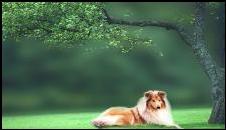
Collies are generally medium-sized dogs of about 10 to 25 kg (22 to 55 lb), fairly lightly built with a pointed snout and erect or partly erect ears, giving a foxy impression. Cattle-herding types tend to be rather more stocky. Collies are always alert and are active and agile. The fur may be short, flat, or long, and the tail may be smooth, feathered, or bushy. Some types were traditionally docked, and some types are naturally bobtailed or tail-less. Types vary in coloration, with the usual base colors being black, black-and-tan, red, red-and-tan, or sable. Many types have white along with the main color, usually under the belly and chest, over the shoulders, and on parts of the face and legs, but sometimes leaving only the head colored – or white may be absent or limited to the chest and toes (as in the Australian Kelpie). Merle coloration may also be present over any of the other color combinations, even in landrace types. The most widespread patterns in many types are black-and-white or tricolor (black-and-tan and white). TemperamentWorking typesWorking collies are extremely energetic and agile dogs with great stamina, well able to run all day without tiring, even over very rough or steep ground. Working collies are of excellent working/obedience intelligence, and are instinctively highly motivated to work. Dogs of collie type or derivation occupy four of the first sixteen ranks in Stanley Coren's The Intelligence of Dogs, with the Border Collie being first. These characteristics generally make working strains unsuitable as pets, as few owners are able to give them the mental and physical challenges they need and, if not well fulfilled, they may become unhappy and badly behaved. However, in addition to herding work they are well suited to active sports such as sheepdog trials, fly ball, disc dog and dog agility. Working strains have strong herding instincts, and some individuals can be single-minded to the point of obsessiveness. They are often intensely loyal. Show and pet typesCertain types of collie (for example Rough Collies, Smooth Collies, Shetland Sheepdogs and some strains of Border Collie and other breeds) have been bred for many generations as pets and for the sport of conformation showing, not as herding dogs. These types have proved to be highly trainable, gentle, loyal, intelligent, and well suited as pets. Their gentleness and devotion also make them quite compatible with children. They are often more suitable as companions than as watch dogs, though the individual personalities of these dogs vary. The temperament of these breeds has featured in literature, film and popular television programs. The novels of Albert Payson Terhune celebrated the temperament and companionship of collies and were very popular in the United States during the 1920s and 1930s. More famously, the temperament and intelligence of the Rough Collie was exaggerated to mythic proportions in the character Lassie which has been the subject of many films, books and television shows from 1938 to the present. HealthSome collie breeds (especially the Rough Collie and the Smooth Collie) are affected by a genetic defect, a mutation within the MDR1 gene. Affected dogs are very sensitive to some drugs, such as Ivermectin, as well as to some antibiotics, opioids and steroids – over 100 drugs in total. Affected dogs also show a lower cortisol concentration than normal. The Verband für das Deutsche Hundewesen (The German Kennel Club) encourages breed clubs to test all breeding. |







|
Breed Info |